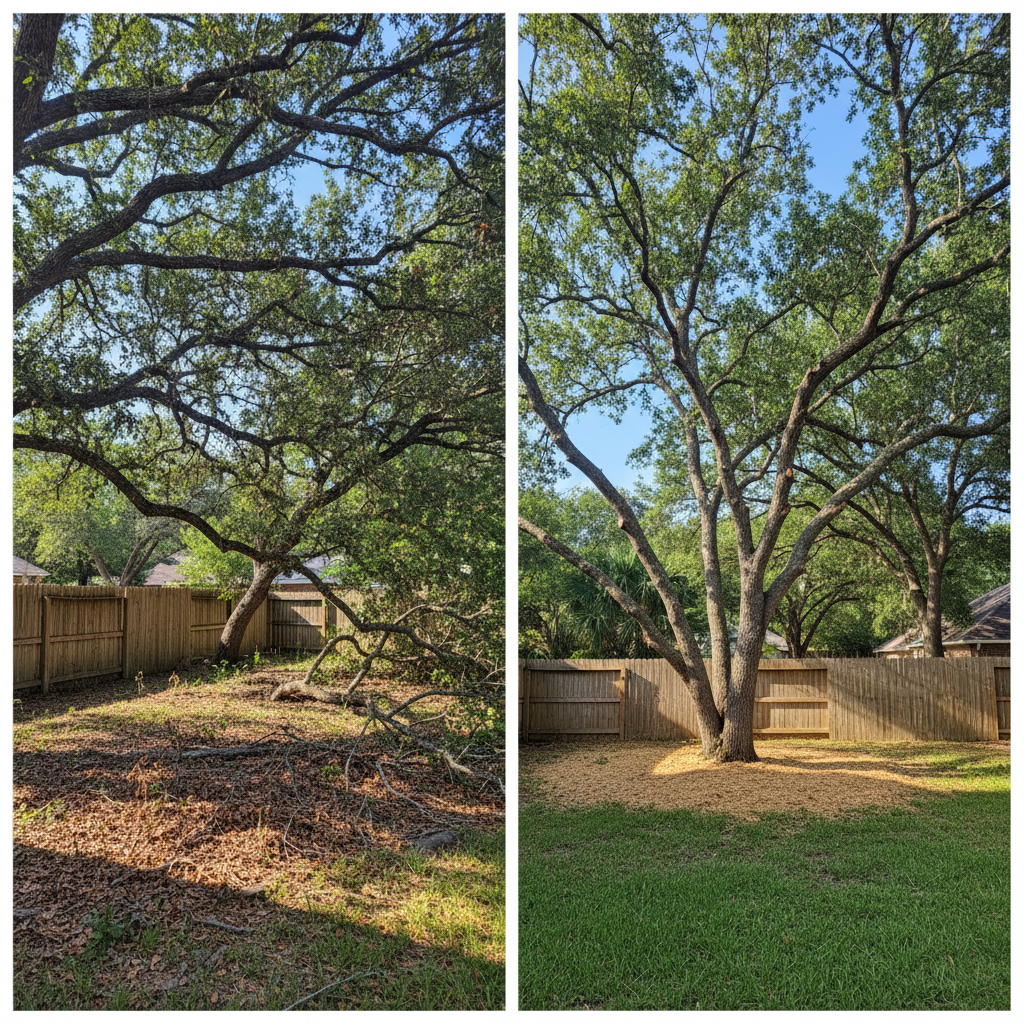
You've got trees in your yard, right? And sooner or later, they're going to need a trim. Maybe they're just getting too big, or you're starting to worry about those branches hanging over your roof. Whatever the reason, you've got a decision to make about how that trimming gets done. And trust me, not all trimming is created equal. Here in Kingwood, I constantly see folks trying to decide between what I call a 'quick fix' and a 'long-term solution.' Let's really dig into the difference between tree topping and proper, professional pruning.
What's Tree Topping?
Alright, let's start with topping. You might hear it called hat-racking, heading, or even just 'cutting the top off.' Basically, it's when someone cuts a tree's main branches back to stubs, often taking off a huge chunk of the crown. They're trying to quickly reduce the tree's height, usually because it's too close to a house or power lines, or maybe the homeowner just thinks it's gotten 'too big.'
On the surface, it sounds like it makes sense, doesn't it? Cut it down, problem solved. But here's the thing: topping is almost always a terrible idea for the tree. It's like giving a person a lobotomy; they might survive, but they're never going to be the same. When you top a tree, you're stressing it out big time. You're removing most of its leaves, which, as you probably know, are how it makes food. The tree then goes into survival mode, trying to grow back as fast as humanly possible.
The Downside of Topping
So, what actually happens after a tree gets topped? A few things, and none of them are good:
- Weak, Fast Growth: Those new shoots that sprout back? We call them 'water sprouts,' and they're barely attached to the old stubs. They grow super fast, trying to replace the lost canopy, but they're just not structurally sound. This means they're much more likely to break off in a strong Kingwood thunderstorm, especially with our clay soils that sometimes don't hold roots as firmly as they should.
- More Disease and Pest Risk: Those big, open wounds from topping? They're basically an open invitation for insects and diseases to move right in. The tree doesn't have the energy to properly seal off those cuts, leaving it totally vulnerable.
- Ugly Appearance: Let's be honest, a topped tree looks awful. It's disfigured, unnatural, and it'll never get its original beautiful shape back. You're left with a bunch of ugly stubs and then a dense, bushy growth that looks more like a bad haircut than a healthy tree.
- Higher Long-Term Costs: You might think topping is cheaper upfront because it's a quick job. But because of that weak regrowth, you'll need more frequent trimming to manage those water sprouts. Plus, the tree is more likely to get sick or even die, meaning you'll eventually pay for removal anyway.
- Reduced Durability: A topped tree is a compromised tree. It's less stable, more prone to storm damage, and generally won't live as long as a properly pruned one.
What is Proper Pruning?
Now, let's talk about how it *should* be done. Proper pruning, done by a certified arborist or a reputable tree service like Midway Tree Solutions, is a completely different ballgame. It's about really understanding how a tree grows and making smart, strategic cuts that actually benefit its health, structure, and appearance.
When I prune a tree, I'm looking for dead, diseased, or damaged branches. I'm removing crossing branches that rub and create wounds. I'm thinning out the canopy to improve air circulation and light penetration, which helps the tree stay healthy. I'm also doing what's called 'reduction pruning' or 'crown reduction' when a tree needs to be made smaller, but it's done by cutting back to a strong lateral branch that can take over as the new leader, not just chopping off the top. It's a precise art, really.
The Benefits of Proper Pruning
This approach has a ton of advantages:
- Better Health and Vigor: Taking out unhealthy branches and thinning the canopy helps the tree use its resources more effectively, leading to stronger growth and better resistance to pests and diseases.
- Stronger Structure: Proper cuts encourage strong branch development, reducing the risk of breakage from wind or ice. This is especially important for our Kingwood homes, where falling limbs can do some serious damage.
- Beautiful Appearance: A properly pruned tree keeps its natural shape and beauty. It looks balanced and healthy, really adding to your property's curb appeal.
- More Durability: Healthy, structurally sound trees are more resilient. They stand up better to storms and live longer, providing shade and value for decades.
- Long-Term Cost Savings: While professional pruning might seem like a bigger investment upfront, it actually cuts down on the need for emergency services, frequent corrective pruning, and early tree removal. You're maintaining an asset, not just fixing a problem.
My Recommendation for Kingwood Homeowners
For homeowners in Kingwood, there's really only one choice if you care about your trees, your property value, and your safety: **always opt for proper pruning.** Topping is a short-sighted, damaging practice that creates way more problems than it solves. It's a quick way to ruin a perfectly good tree and invite future headaches.
If you're concerned about a tree's size, its proximity to structures, or its overall health, get a professional opinion. A good arborist can assess the situation and recommend the right kind of pruning to achieve your goals without harming your tree. We're here to help your trees thrive, not just survive.