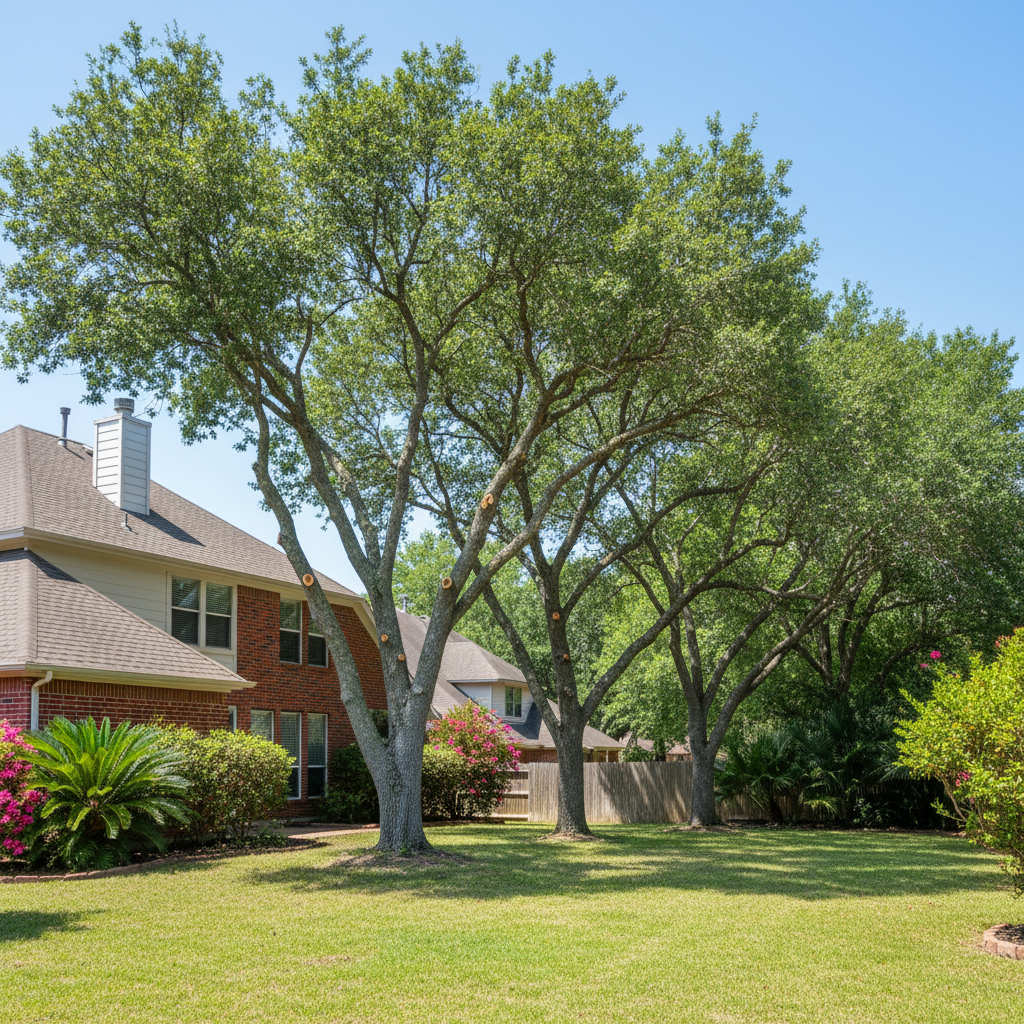
You've got some beautiful trees in your yard, right? Most folks in Kingwood do. But keeping them healthy and looking good isn't just about giving them a haircut whenever you feel like it. The local climate here, with our hot, humid summers and occasional freezes, really dictates when and how we should be trimming trees.
When's the Best Time to Trim Your Trees?
Honestly, it depends on the tree and what you're trying to achieve. But generally speaking, for most deciduous trees – that's the kind that loses its leaves in the fall – the dormant season is your best bet. That's late fall through early spring, after the leaves have dropped and before new buds start forming. Why then?
Less Stress: When a tree is dormant, it's not actively growing. Trimming during this time puts less stress on the tree, helping it recover faster.
Clearer View: Without leaves, it's a lot easier for me and my crew to see the tree's structure. We can spot dead, diseased, or crossing branches more effectively.
Pest Control: Many pests and diseases are less active in the colder months, reducing the risk of infection through fresh cuts.
Now, for evergreen trees, like pines or magnolias, you've got a bit more flexibility. You can usually trim them any time of year, but avoiding the peak growth spurt in spring is a good idea. If you're dealing with fruit trees, that's a whole different ballgame, and we'd need to talk specifically about those.
What about summer? I generally tell people to avoid heavy pruning in the summer, especially here in Kingwood. Our intense heat and humidity can stress a tree out even more if it's trying to heal big cuts. Light corrective pruning or removing dead branches is usually fine, but save the major work for cooler months.
Weather Conditions That Affect the Work
You might think,